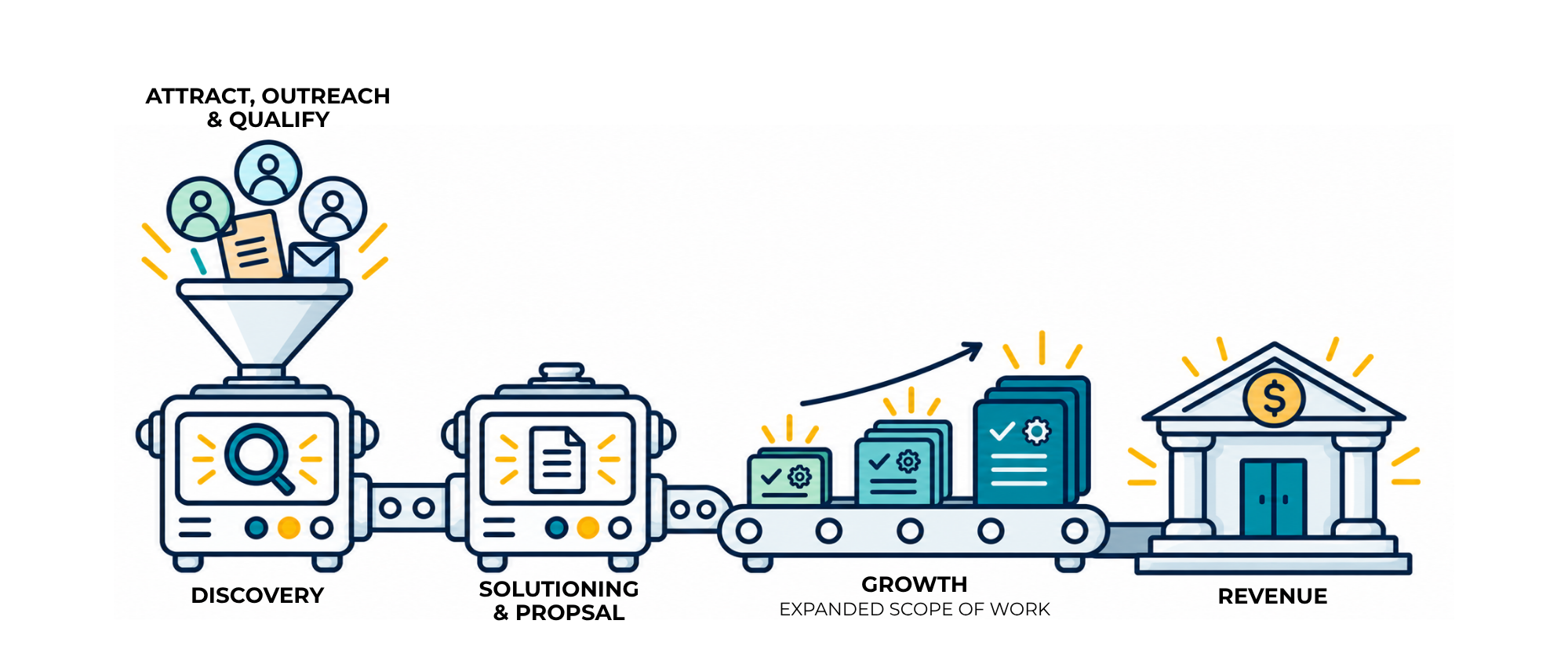

Need More Prospects? Give Them a Reason to Talk With You
Referrals bring you good customers. But you cannot choose when the next introduction arrives.
If you lead a technology services company, that creates a familiar tension. Your team needs new prospects, but asking people to sit through another presentation about your services gives them little reason to respond.
An event can create that reason.
A small executive dinner. A focused lunch. A conversation about a business problem your prospective customers need to understand.
But before you book the room, decide what should happen after people leave.
A full agenda can work against you
Years ago, a technology company invited me to speak at an event in Kentucky.
They had a strong reputation, established vendor relationships, and sponsors willing to help fund the event. There was plenty to work with.
Then I learned about the agenda.
Five or six sponsors would speak during a half-day program. I would speak last.
The lesson: sponsor participation needs to serve the audience and the purpose of the event. Every additional presentation takes time and attention. Funding the room does not automatically create a reason for a prospect to take the next step.
It is easy to build an event around everyone who wants microphone time. The harder work is building it around the people you want to reach.
Start with the prospect’s decision
Before invitations, slides, or menus, answer three questions.
1. Why would the right person attend?
“Learn about our services” is a weak invitation.
A business leader needs a reason to interrupt the day. What decision are they facing? What exposure might they be overlooking? What costly assumption could your session help them examine?
Choose one problem you can explain clearly and credibly. Make the invitation specific enough that the intended buyer recognizes its relevance.
Then build your guest list around that buyer.
2. What should they understand differently?
Your presentation needs a central idea that changes how attendees see the problem.
For a security event, that might mean helping executives think about exposure through both business impact and likelihood. Technical features can support the discussion, but the business consequence gives those features meaning.
Ask yourself: What should someone be able to explain to a colleague the next morning?
If the answer requires listing everything your company sells, narrow the message.
3. What useful next step can they accept?
Decide this before the event.
A focused discovery conversation or an assessment-scoping discussion may be appropriate. Explain what the prospect gets, what participation requires, and what happens afterward.
Keep the initial commitment simple. You can arrange the date and confirm the detailed scope in follow-up.
Your sales team should understand the invitation, recognize who fits, and know who owns each response.
Plan the follow-up before ordering lunch
An event is one part of customer acquisition. Invitations bring people in. The message earns attention. The next step creates a path to a sales conversation.
Follow-up connects those pieces.
This week, take your next event idea and write five things on one page:
- The buyer you want to reach.
- The business problem that earns their attention.
- The central idea they should remember.
- The next step you will offer.
- The person responsible for following up the next business day.
DeeAnn and I bring sales strategy and marketing execution together in our work. This is where that connection matters: the invitation, presentation, offer, and follow-up need to support the same purpose.
I wrote Convert the Room to share lessons from years of helping technology companies run customer acquisition events, including mistakes like the crowded sponsor agenda.
Before you invest in another room full of prospects, build the path to the conversation you want afterward.
Read Convert the Room: https://a.co/d/0jjrp74Y