
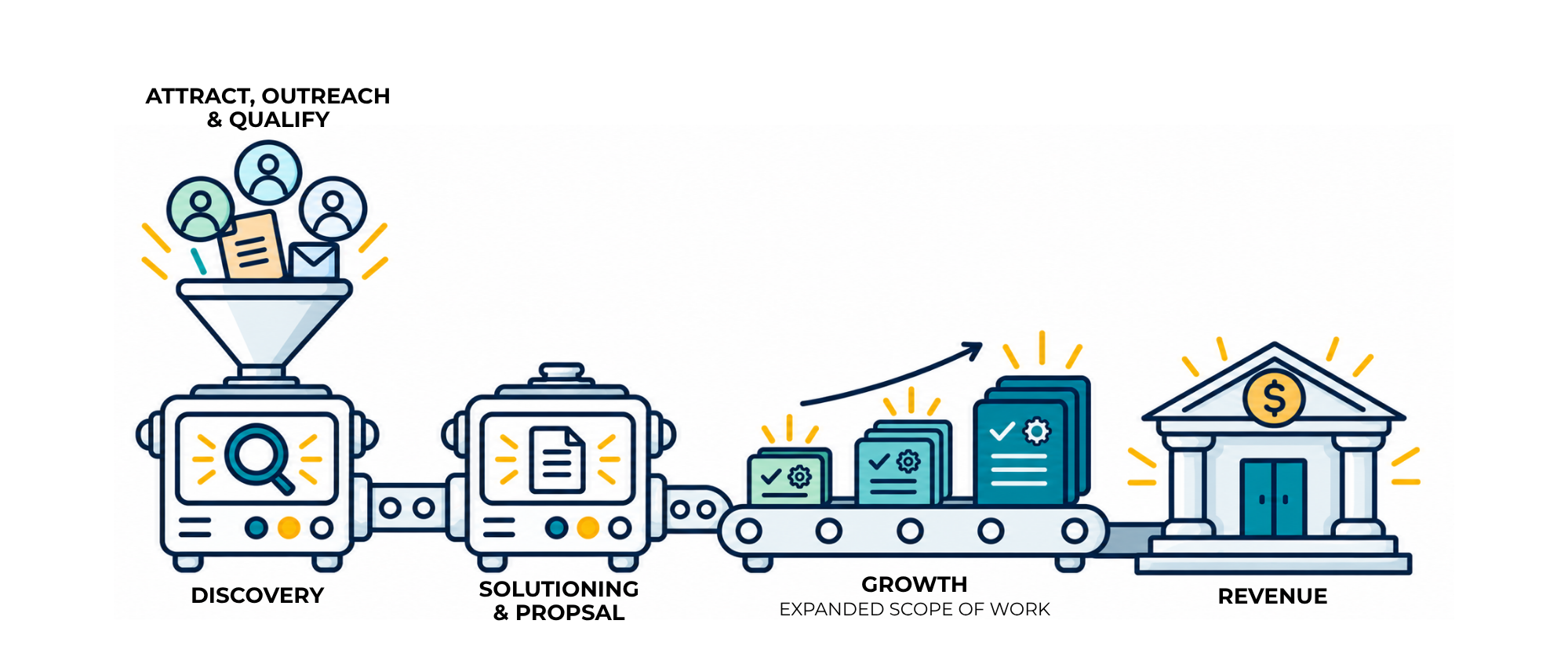
Before You Buy More Leads, Find Out What Happens to the Ones You Have
When revenue falls short, where do you look first?
More prospects? More marketing? More calls?
Those might be the right moves. But before you spend more money filling the pipeline, there’s another question worth asking:
What happens to the opportunities already entering your business?
When we do a revenue assessment, we start by tracing what happens to those opportunities. Where do buyers move forward? Where do they stall? What evidence helps explain the difference?
That gives us a clearer view of what is working and where leadership should focus first.
Follow the opportunity all the way through
A business can create good content, attract interested buyers, and still struggle to turn that interest into revenue.
Start with the handoffs.
When someone responds to your marketing, who follows up? What happens if that person is interested but isn’t ready to buy? When a conversation becomes a sales opportunity, what qualifies it to enter the pipeline?
Then follow it further.
Does discovery uncover a business problem worth solving? Does the proposal reflect something the buyer has agreed matters? Is there a clear decision process and a next step both sides have committed to?
Keep going after the sale. Who owns the customer relationship? How are renewal risks identified? When does someone explore the customer’s next business need?
Revenue growth depends on how well those connections work.
If you examine marketing, sales, and customer service separately, you can miss the point where progress breaks down.
A pipeline stage should tell you something about the buyer
Here’s one question worth bringing into your next pipeline review:
What has the buyer actually done to justify moving this opportunity forward?
Sending a proposal tells you that your team completed an activity. It leaves some important questions unanswered.
Has the buyer agreed on the problem? Do you understand who will make the decision? Is there a business reason to act now? Has the buyer committed to reviewing the proposal with you?
Those answers help you decide where to spend time and what belongs in the forecast.
They also give salespeople something useful to work with. A request to update the close date creates another administrative task. A conversation about the buyer’s unresolved concerns creates an opportunity to coach.
When you map your revenue process, include the buyer commitments that support each step. Then compare that map with what actually happens in your deals.
Check the evidence before choosing the fix
A leadership interview is a valuable starting point. The next step is to compare what people describe with the records available.
If leaders describe the sales stages differently, examine the actual stages and how people use them.
If someone quotes a win rate, check which opportunities are included and over what period.
If the policy says every inquiry receives a response within four hours, look at response times.
You’re looking for enough reliable information to make a responsible decision.
Missing information needs to be labeled honestly. An unanswered question is a reason to investigate, not proof that the team is failing.
Look for strengths, too. You want to protect the practices that customers value and your people execute well.
Choose the first change carefully
Once you understand the problem, resist the temptation to launch ten improvement projects.
Choose the few changes most likely to address the constraint you found.
For each one, identify:
- What will change.
- Who owns it.
- What happens first.
- How you will know whether it helped.
Sometimes the first move is better follow-up. Sometimes it is clearer qualification, more useful content, or consistent coaching. Sometimes you need better information before committing more money.
The sequence should follow the evidence.
Start with five stalled deals
This week, choose five opportunities that stopped moving. Review them with your team and ask:
- What business problem has the buyer confirmed?
- What evidence supports the current stage?
- What next step has the buyer agreed to, and when?
Listen for patterns. Use what you find to choose one improvement, assign an owner, and set a date to review progress.
Before you invest in more opportunities, understand what it takes to move the ones you already have.
And if you need help following that trail, we can work through it with you.